Other companies also produced small 3 and 4 wheeled vehicles with an Automatic Coupling. Karrier developed their Cob tractor unit, fitting it with a coupling which was compatible with the Scammell and this was a popular choice. Jensen Motors, the well known bodybuilders, produced a small 4-wheel tractor unit called the Jen Tug. Ford also produced a tractor unit called the Tug which was based on their 8hp Model Y cars, but whilst this was a 3-wheeled vehicle it wasn’t fitted with an automatic coupling. A number of companies also offered larger 4-wheeled tractor units equipped with an automatic coupling and a few examples of these are included below:
Dennis ‘Horla’
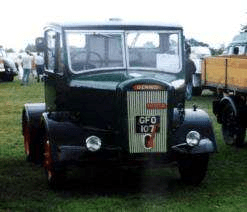
Horla was the model name given by Dennis Lorries to the post war PAX model when supplied in normal form as an articulated tractor. These vehicles were developed from the pre-war “ACE” or “Flying Pig” and were fitted with that models petrol engine. Perkins diesels were an option and the vehicle illustrated, made in the early 1950’s, is fitted with their P6 engine and Scammell’s 6 ton coupling gear.
FAR Cheval Mècnique
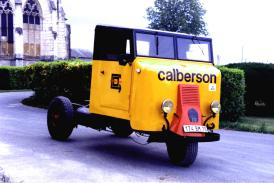
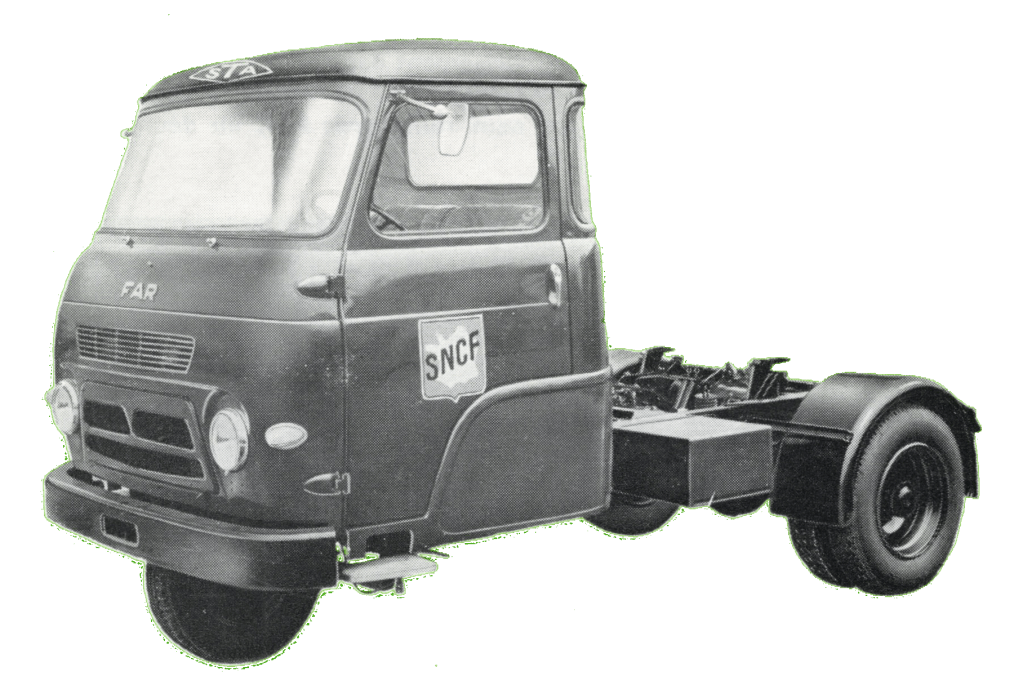
FAR, in France, built Scammell Mechanical Horses under licence; Known as “Le Cheval Mècnique” early versions were fitted with Citroen engines as used in the Traction Avant, and followed the design of Scammells Mechanical Horse. Later ones were built with FAR develops incorporating modern features such as a tilting cab and a braked front wheel! The 1938 Calberson livered version seen above is owned by the Association des Amis du Musee du Poids Lourd and was photographed during a visit by The Mechanical Horse Club in May 1986. A good collection of FAR related images can also be seen here.
Ford Y Tug
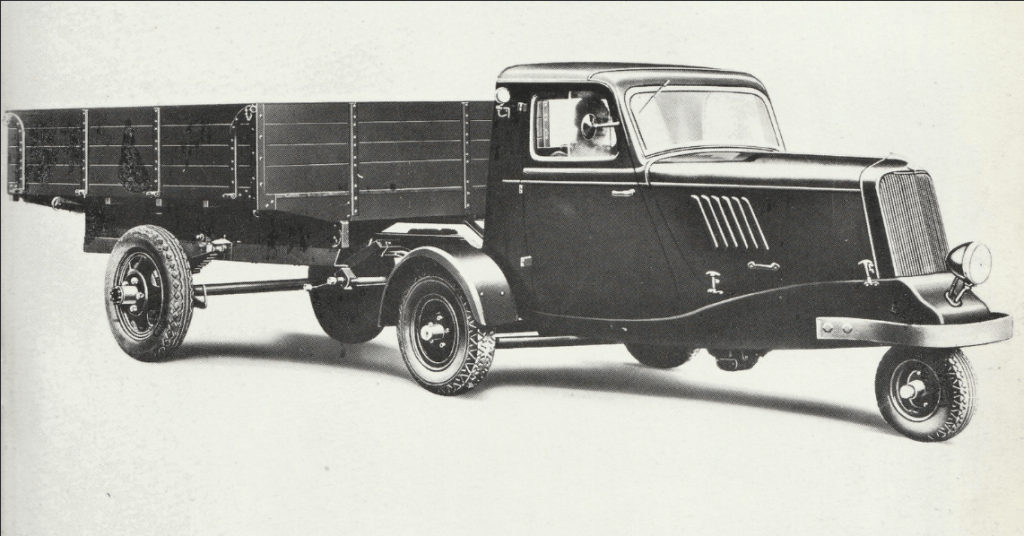
An original publicity image dated 1935, the Ford Model Y Tug was built in a similar vein to the Scammell MH with a top spood of 18mph. Briggs Motor Bodies, built a number of these tug bodies, but only 111 are believed to have been built.
Jenson Tug and Helec
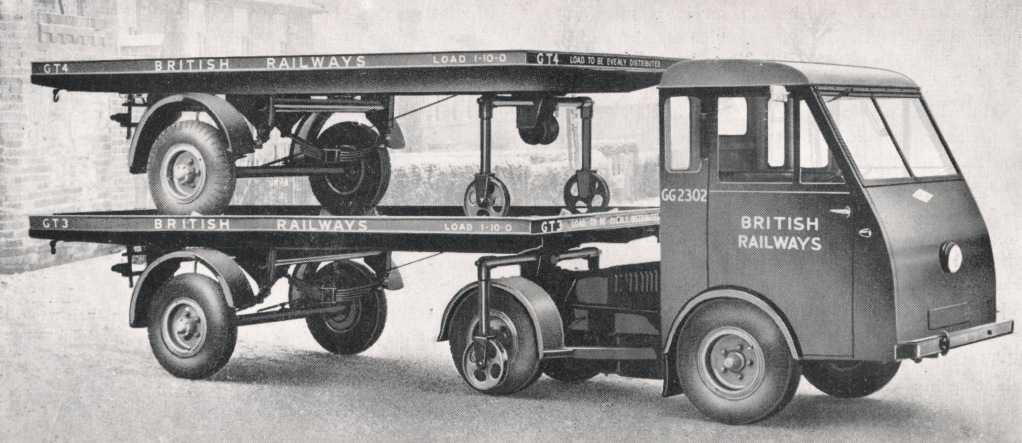
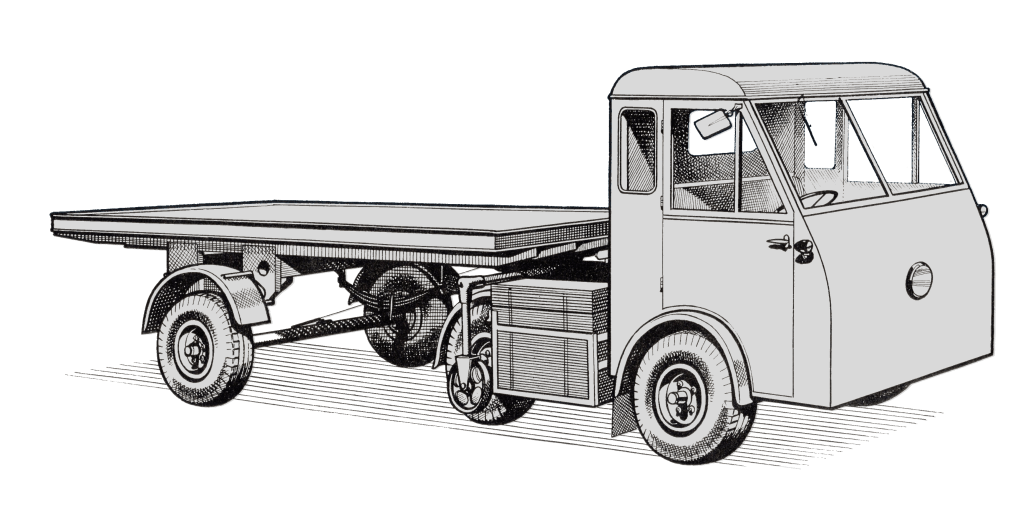
Jensen Motors Ltd., West Bromwich, introduced the Jen-Tug after World War 2. With a payload capacity between 30 cwt. and 40 cwt. An outstanding feature of the design was the employment of a sub-frame, on which was mounted the complete power unit and transmission. It was possible to remove the whole unit, merely by taking out one bolt in a Silent-bloc mounting, then disconnecting powerplant services The Jen-Tug was powered by an Austin A40 petrol engine, whilst the Jen-Helec had an electric powerplant. The powerplant for the Tug was set over to the off-side of the chassis so that the rear axle drive housing would clear the ramp of the coupling gear, this was not a requirement for the Helec as its powerplant took up less space. All controls were mounted on the chassis, making cab removal easy. Jensen also sold trailers to pair with the tugs measuring 13ft with a width of 6 ft. 6 in. The turntable incorporated two non-retracting vertical arms with wheels at the lower end to enable the trailer to be manoeuvred when detached from the tractor.
Karrier Bantam
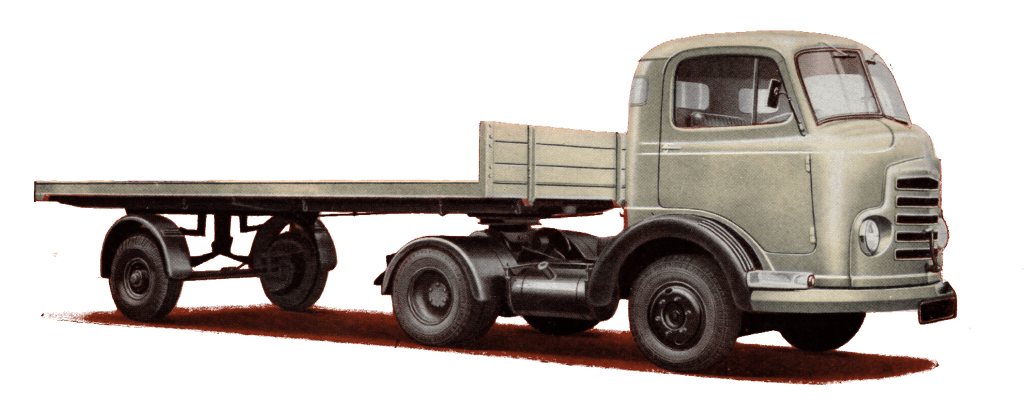
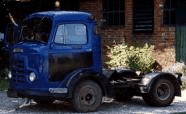
The Karrier Bantam was introduced in the mid 1930’s as a lorry for loads of up to 2 tons. Its small wheels gave it a low loading height. Initially fitted with a 9hp engine, it was soon to get an 18hp unit from the contemporary Rootes Humber car range. In 1950 the cab design was changed and the Bantam was offered with a 56hp Perkins diesel engine. In articulated tractor form the Karrier was very popular with British Railways and other parcels carriers and continued in production until 1970 when it was fitted with the Leyland OE160 engine, similar to that powering the Scammell Townsman and Ferguson tractors. It was fitted with Karrier’s own 3 ton coupling gear known as the Karrier “J” Coupling Gear that was fully compatible with the Scammell version. There was also a “BK” Coupler compatible with those fitted to Jenson Tugs. The example abowas recovered after many years of storage on a Sussex farm and is being restored by the Clubs Spares Register.
Karrier Cob
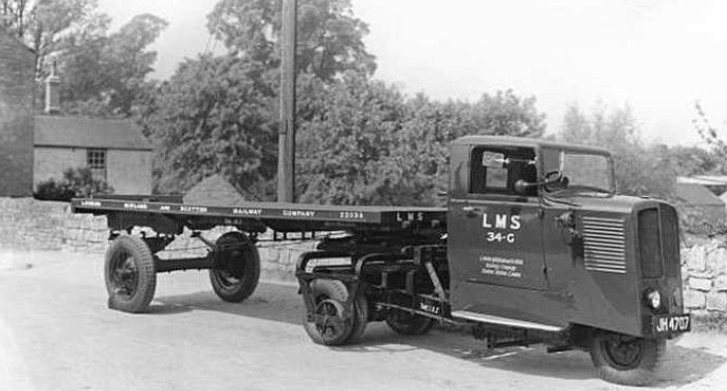
The Karrier Cob was designed by J. Shearman, road motor engineer for the London, Midland and Scottish Railway Company, and buily by Clayton & Co of Huddersfield from 1929. Like the Mechanical Horse the Cob was designed to operate in confined spaces and manoeuvre more easily in traffic. It was capable of pulling a three-ton load at 18 mph and restarting on a gradient of one in eight. Production tractors were powered by Jowett two-cylinder 7hp engines with chain-drive reduction gearing.
Morrison Electricar Electric Horse
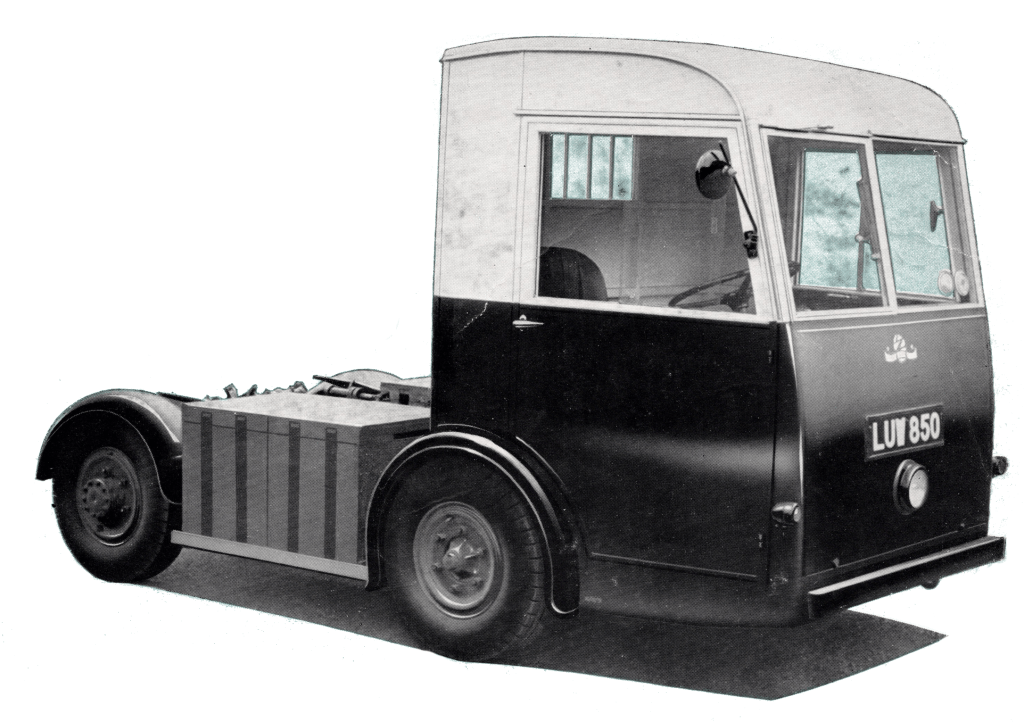
The Austin Crompton Parkinson Organisation introduced in 1951, a 2T articulated vehicle. Known as the M.E. 2T Electric Horse it was a battery driven vehicle equipped with the Scammell Automatic Coupling. Complete with all the mod cons of the time including Hydraulic brakes on all four wheels, a walkthrough cab and Rubber mudwings.
Reliant Ant
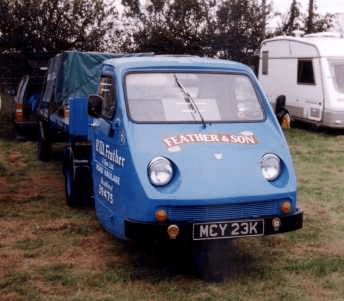
The last flowering of the Mechanical Horse (three wheeled) concept was by Reliant who, along with Dunn BTB, produced an articulated version of their TW9/Ant 3/4 ton pick up. Several examples of these vehicles have been owned by club members over the years and the club have welcomed them for their contribution to the preservation and restoration of these classic vehicles. Most Ants/TW9s are of the pick up truck variety but at least one artic unit survives, pictured below.
The TW9 was produced by Reliant from the late 1960s onward, initially for the Greek and Turkish markets, but it later became very popular with local councils who used them in their parks and street cleansing departments.
The engines fitted were Reliant’s own 750cc and 850cc aluminium unit coupled to a Reliant 4 speed gearbox. The chassis is a pressed steel frame with tubular cross members. The truck has a payload of 16 Cwts, does 60mph and around 35 miles per gallon. In true Reliant tradition the cab is a fibreglass moulding. A variety of bodies were offered by various different coachbuilders and included dustcarts, tower wagons, tippers and street washers/gully cleaners and suckers as well as the pick up truck.
Thornycroft Nippy
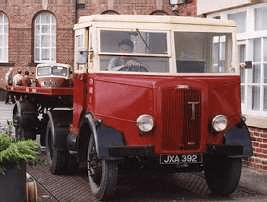
The introduction of Scammells Automatic Coupler design changed how manufactures looked at articulation. With the Mechanical Horses slow speed a faster vehicle was required for longer more rural requirements. Thornycroft modified a number of 3T chassis to accept the Scammell 6T coupling resulting in the Nippy. Pictured here is JXA392 New to British Railways Western Region in July 1949 it recieved Fleet No. WR8668. Later life saw it transferred to Victoria & Albert Docks with the Fleet No. L6TN302. Sold in to preservation on 30/8/67
 The Mechanical Horse Club