The Scarab-Four was intended to improve upon the short haul abilities of the three wheeled Scarab. Creating a faster, medium haul vehicle, whilst remaining fully interchangeable with operators existing trailer fleets.
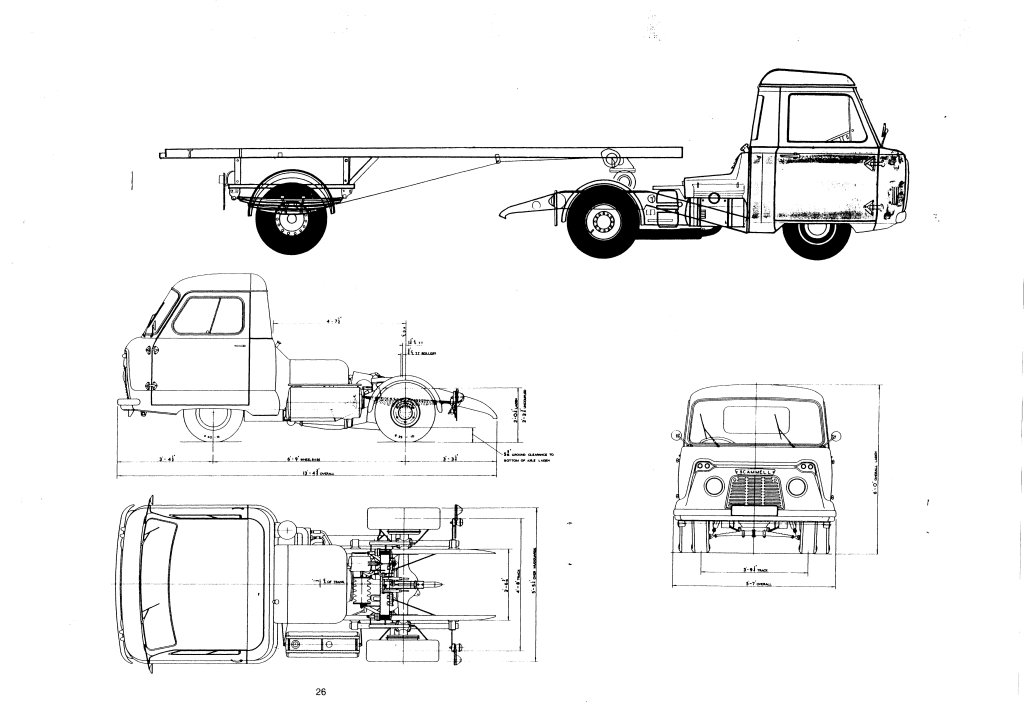
Post war, foreign competition and rationalisation of UK manufacturers led to Scammell coming under Leyland Motors in 1955. This opened up access to ready-made components, expertise and other developments. In 1961 Standard-Triumph International Limited became part of Leyland this provided the opportunity for Scammell engineers to develop a tractor unit more suitable to longer haul working.
The idea was to merge the Scarab with Standards Atlas van. The rear of the Scarab provided the interchangeability with existing trailer fleets whilst the Atlas front end provided a larger cab and an extra wheel for better stability.
Both vehicles were cut behind the rear panel of the cab. The rear section of the Scarab and front section of the Atlas were then joined by 6 bolts

The Scarab drivetrain was retained and the gearbox ratios unaltered, a Standard 2.26 litre direct injection, 52.5bhp diesel was fitted, with a single reduction rather that the Scarabs usual double reduction unit. This gave maximum speeds in each gear as 6mph in 1st, 14 in 2nd, 25 in 3rd and with an improved 42mph in 4th.
The Standard suspension, steering and brakes remained at the front. However, the radiator grille was used for cab ventilation whilst underfloor ducting was utilised for engine cooling.
With the Scarab engine position being used behind the cab and the Standard position being within the Atlas cab its removal allowed a full width flat floor. A full width seat box was fitted with 2 adjustable seats, additional features of the cab were twin wipers, an interior light and a heater. A very quiet ride was also advertised due to the externally mounted engine, although this in practice was nonsense as anyone who has driven the 3 wheeled Scarab can testify.
The Scarab-four became available in the middle of 1964 with the Standard Atlas being re-named the Leyland 20. It proved to be uncomfortable being described as unbearable with everything vibrating fit to burst. It was also found the the engine had a tendency to overheat at sustained high speed and hill climbing.
The Cab was criticised for having a lack of room, poor ventilation with the driver’s eyeline being above the windows, hampering visibility. This was particularly noticeable when reversing as the sliding windows opened barely enough to get the driver’s head out and the doors were too long to open in confined spaces.
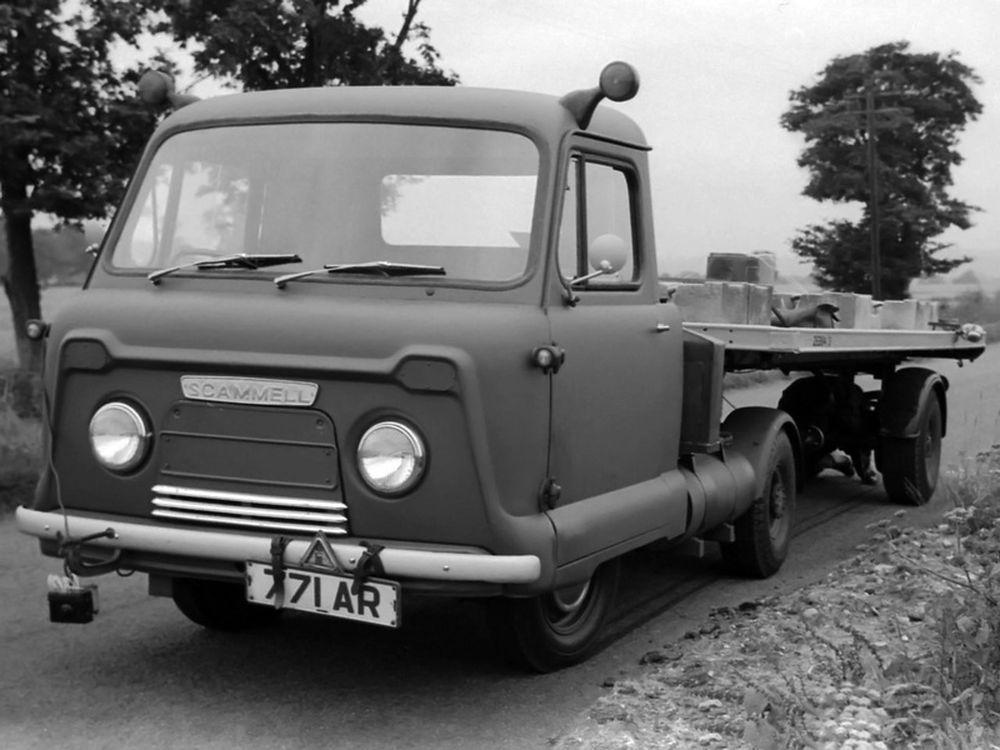
In total, fewer than 100 Scarab-Fours were produced with the majority going to South African Railways.
 The Mechanical Horse Club