A development of the Mechanical horse, and updated with the arrival of the Scarab. Scammell introduced an equally manoeuvrable yet self contained load carrying vehicle.
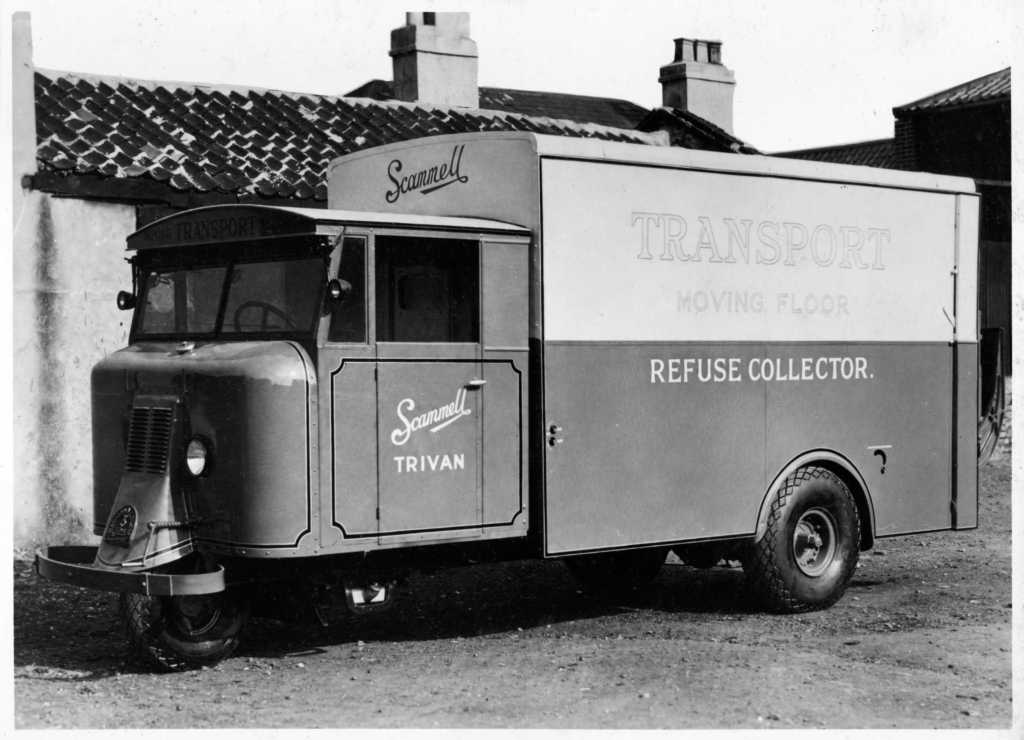
Designed to carry 3 Tons the Trivan, shared many characteristics with its Mechanical Horse basis, early examples having a 10 h.p. four-cylindered petrol engine developing 24 b.h.p. Its overall length being 19′ 7″. As mentioned, its outstanding feature was, of course, its remarkable manoeuvrability; being able to turn in its own length. This like the Standard Mechanical Horse was a big attraction to operators whose vehicles were called upon to negotiate narrow streets and sharp’ corners, that existed in docks, factories and closely built-up industrial areas of the time.
The frame is composed of two sturdy channels strongly braced by tubular cross-members, and bridged at the front, like the Mechanical Horse, to accommodate the forked steering head and front wheel. In general, the chassis follows that of the prototype, indeed it is constructed almost entirely of standard mechanical horse components, without the sloped ramps for the automatic coupling.
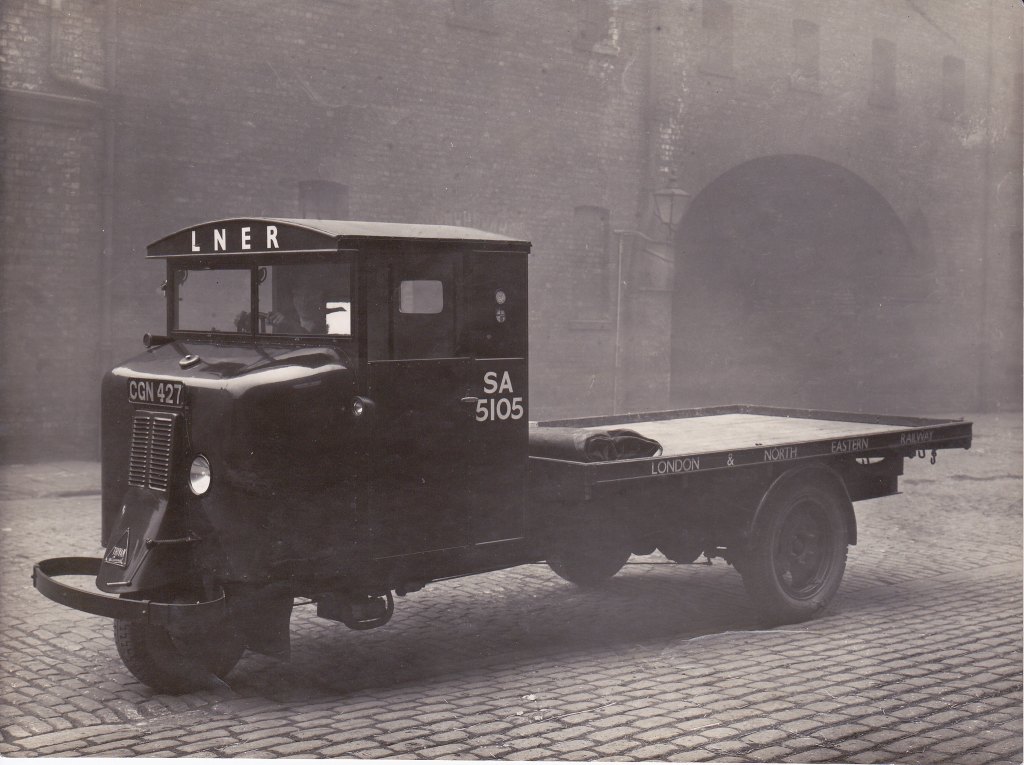
The Trivan followed the development of the Mechanical Horse later utilising Scarab components.
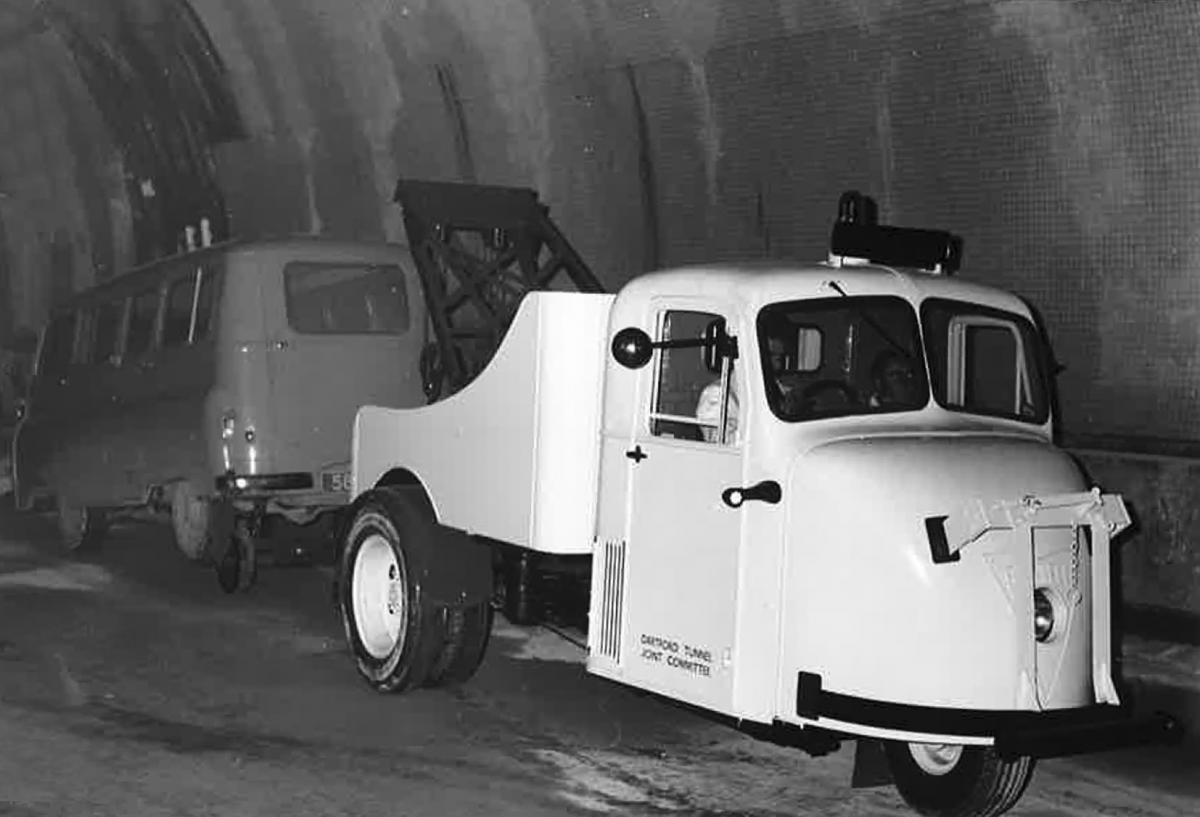
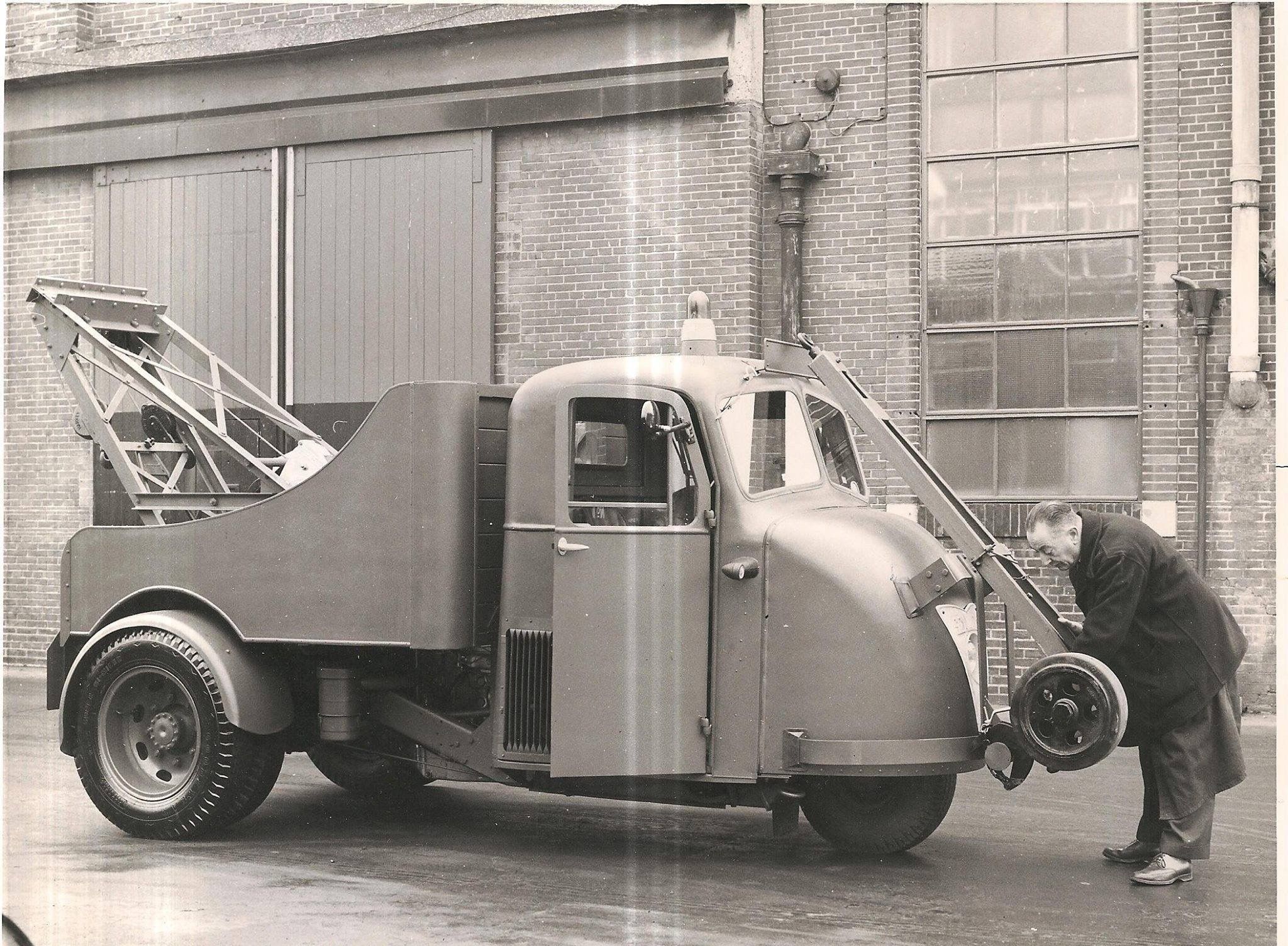

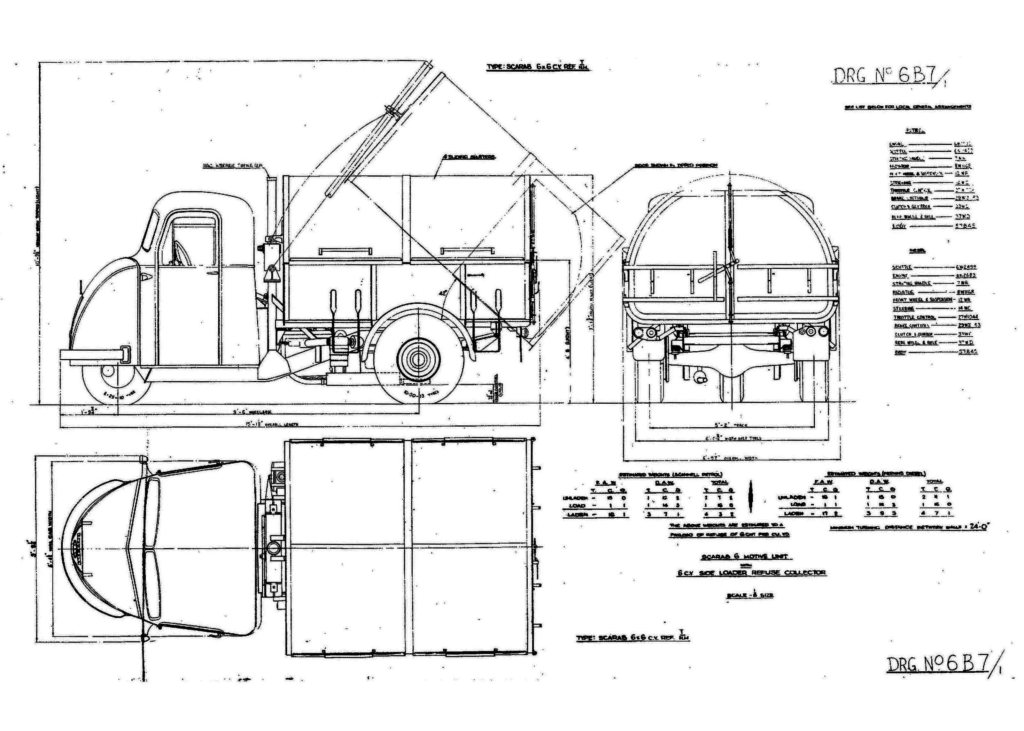
Many styles of Trivan were built, including Standard Flatbeds and Box vans, Refuse Lorries, street cleaners, recovery trucks, fire engines and even more designs.
 The Mechanical Horse Club